A year after our first look at FPGA SoC instrumentation products, the two reference platforms in the sub-$2k range (RedPitaya STEMlab 125-14 Gen 2 and Liquid Instruments Moku:Go) have followed visibly different trajectories. Both are Zynq-class SDI boxes, both target the same lab bench, but they answer two opposite philosophies.
Two philosophies, one Zynq
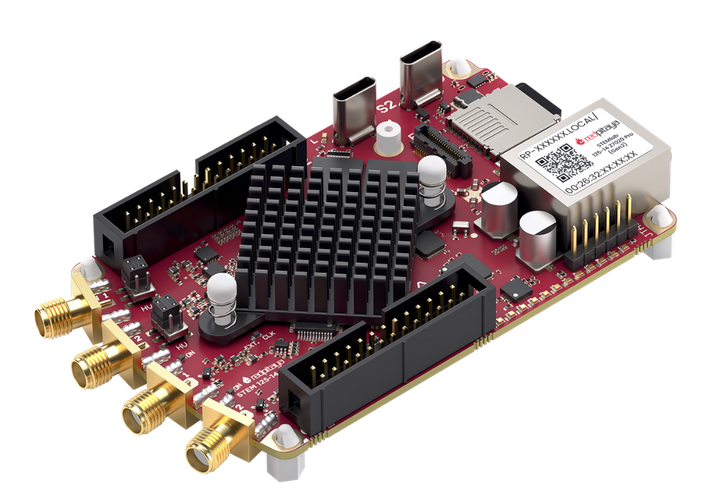
The STEMlab is built around the Zynq 7010/7020 with a 14-bit / 125 MSPS front end. Everything is open: the FPGA fabric is yours to reconfigure, the Linux image is hackable, and the reference designs (oscilloscope, spectrum analyzer, PID, lock-in) ship as Verilog/VHDL sources. This makes it the de facto choice in physics labs (quantum optics, NMR, photonics control loops) where teams need to push custom logic into the PL.
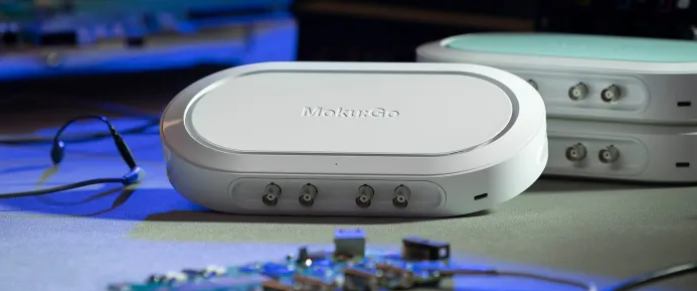
Moku:Go takes the opposite stance. The hardware is sealed behind a polished app ecosystem: instruments load like apps on a phone, and the UX (Mac, Windows, iPad) is genuinely the best in class. Liquid Instruments has continued to broaden the instrument library (frequency response analyzer, lock-in amplifier, laser lock box) and Moku Cloud Compile remains the supported escape hatch for users who need their own FPGA logic, without leaving the Moku framework.
Where each one wins
For a research lab that needs deep customization (pushing a feedback loop into the PL, integrating a custom protocol, or instrumenting a high-rate physics experiment), STEMlab still wins on transparency and price-per-LUT. The trade-off is the time investment: you are signing up for Vivado, AXI buses, and a non-trivial learning curve.
For teaching, prototyping, or any setting where the priority is getting clean measurements quickly, Moku:Go wins on the click-to-measurement path. Calibration, UI, and the multi-instrument workflow on the same channels are hard to match with an open-source stack alone.
Is real competition arriving?
Twelve months ago, the natural assumption was that more entrants would crowd this segment. In practice, very little has actually shown up. Koheron continues to ship Zynq-based boards aimed at the same photonics and quantum optics labs as RedPitaya, but with a much smaller catalog and community. Digilent's Eclypse Z7 with Zmod ADC/DAC modules remains the closest "build your own STEMlab" alternative, but it asks the user to do most of the integration work. Microchip's PolarFire SoC (RISC-V plus mid-range FPGA fabric) is the most architecturally interesting newcomer, with real traction in low-power and security-sensitive applications, but no turnkey instrumentation product has emerged on top of it yet.
The reason competition is slow is that the hardware is the easy part. The moat is the software stack and the user community. Cloning a Zynq board takes a quarter; cloning ten years of open-source reference designs and lab citations takes a decade. Pressure on the segment is more likely to come from adjacent directions: Moku:Lab and Moku:Pro pulling expectations upward, and increasingly capable USB scopes (Analog Discovery 3 and similar) nibbling at the bottom of the education market.
Convergence in 2026
The interesting move of the past twelve months is convergence. RedPitaya has invested in higher-level software (better web UI, Python APIs, ready-to-use control templates), closing part of the UX gap. Liquid Instruments has invested in Cloud Compile and richer integrations, closing part of the openness gap. Neither has crossed into the other's territory, but the middle ground is shrinking.
The choice in 2026 still comes down to a single question: do you want to own the FPGA, or do you want to forget it exists? Both answers are now legitimate, and both ecosystems have matured enough that the wrong pick mostly costs time, not capability.